
Ep.107 / ACT UP, The Missing Generation & The Legacy We Still Carry (PART TWO)
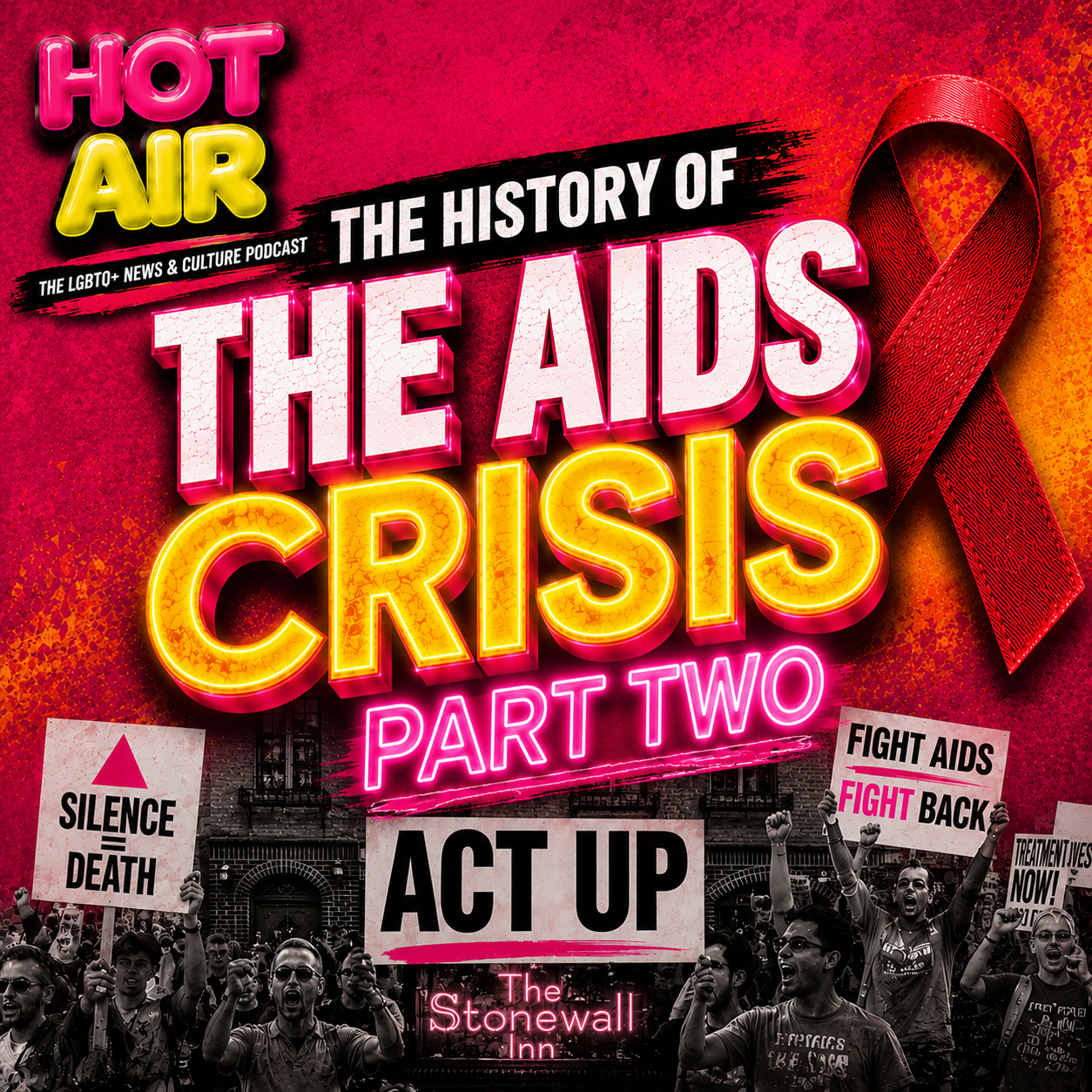
The AIDS crisis wasn't just a medical emergency—it became one of the most influential civil rights movements in modern history.
explore how grief transformed into activism through ACT UP, how government inaction fueled one of the darkest chapters in LGBTQ history, and why millions of younger queer people unknowingly grew up without an entire generation.
ACT UP, The Missing Generation & Why the AIDS Crisis Still Matters Today
The AIDS crisis transformed LGBTQ history forever. While Part One of this series explored the origins of HIV/AIDS and the devastating early years of the epidemic, Part Two focuses on the people who refused to stay silent.
The AIDS epidemic wasn't only a public health crisis. It became one of the largest grassroots activist movements in modern history and permanently changed medicine, healthcare advocacy, LGBTQ rights, and the relationship between marginalized communities and political power.
Understanding ACT UP, the missing generation, and HIV stigma remains essential for understanding today's LGBTQ community.
ACT UP Changed More Than LGBTQ History
As thousands of people died throughout the 1980s, many activists became frustrated with what they viewed as an inadequate response from government institutions, pharmaceutical companies, and healthcare systems.
Rather than waiting for change, activists organized.
Founded in 1987, ACT UP—AIDS Coalition to Unleash Power—became one of the most influential activist organizations in American history.
Their demonstrations were loud.
They were disruptive.
They demanded attention.
But behind every protest was one simple reality:
People were dying.
ACT UP demonstrations helped accelerate conversations around research funding, experimental drug access, patient advocacy, and public awareness.
Many historians credit the organization with fundamentally changing how patients participate in medical research and healthcare policy.
Larry Kramer and the Power of Anger
Few individuals became more closely associated with AIDS activism than Larry Kramer.
The writer and activist challenged both political leaders and the LGBTQ community itself, arguing that silence was costing lives.
His message wasn't always comfortable.
It wasn't designed to be.
Kramer's urgency reflected the desperation of an entire generation watching friends disappear while institutions moved slowly.
His influence continues to shape LGBTQ activism today.
Government Response During the AIDS Epidemic
One of the most debated aspects of AIDS history involves the political response during the epidemic.
Many activists argued that national leaders failed to respond with the urgency the crisis demanded.
This perceived lack of action became one of the defining emotional experiences for many LGBTQ Americans.
While historians continue debating specific decisions and timelines, one fact remains clear:
The AIDS crisis fundamentally changed how LGBTQ communities viewed government, healthcare, and political advocacy.
The Missing Generation
Perhaps no phrase better captures the emotional impact of AIDS than "The Missing Generation."
Hundreds of thousands of LGBTQ people died during the epidemic.
These weren't simply statistics.
They were future artists.
Future activists.
Future teachers.
Future mentors.
Future parents.
Entire friend groups disappeared.
Communities lost cultural leaders, business owners, musicians, healthcare workers, volunteers, and advocates.
Many younger LGBTQ people today unknowingly inherited a community shaped by this absence.
Survivor's Guilt
Many people who lived through the epidemic expected to die.
Instead, medical advancements allowed them to survive while many of their friends did not.
This created profound survivor's guilt that continues affecting many older LGBTQ adults today.
The psychological impact of the AIDS epidemic extended far beyond physical illness.
Grief became a defining feature of an entire generation.
HIV Stigma Today
Modern HIV treatment has transformed life expectancy.
People living with HIV who receive appropriate treatment can live long, healthy lives.
Scientific advances such as PrEP and U=U (Undetectable = Untransmittable) have dramatically reduced transmission.
Yet stigma remains.
Many misconceptions about HIV originate from the fear and misinformation surrounding the epidemic during the 1980s.
Education continues to be one of the most effective tools for reducing discrimination.
Why This History Matters
Learning LGBTQ history isn't about dwelling on tragedy.
It's about understanding resilience.
The AIDS epidemic demonstrated extraordinary courage, compassion, activism, and community.
Faced with overwhelming loss, LGBTQ communities organized healthcare networks, educated themselves about medicine, cared for one another, and demanded better treatment from institutions that had failed them.
These efforts reshaped healthcare advocacy for everyone—not just LGBTQ people.
The Legacy Lives On
Today, Pride celebrations, LGBTQ community centers, HIV awareness campaigns, and countless advocacy organizations all carry the influence of lessons learned during the AIDS crisis.
Many rights enjoyed today were fought for by people who never lived long enough to experience them.
Their stories deserve to be remembered.
Their activism deserves to be celebrated.
Their lives deserve to be honored.
The AIDS crisis remains one of the defining chapters of LGBTQ history, not only because of the lives that were lost, but because of the extraordinary courage shown by those who refused to let those lives be forgotten.
The greatest way to honor that legacy is to continue telling these stories, educating future generations, challenging stigma, and remembering that history shapes the present far more than we often realize.
Because while the epidemic changed the LGBTQ community forever, it also revealed something extraordinary:
Even in the face of unimaginable loss, a community united by love, resilience, and determination can change the world.