
Ep.73 / Let Them, Manifest, Make Money: The 3 Books That Quietly Changed How I Think, Love, and Earn
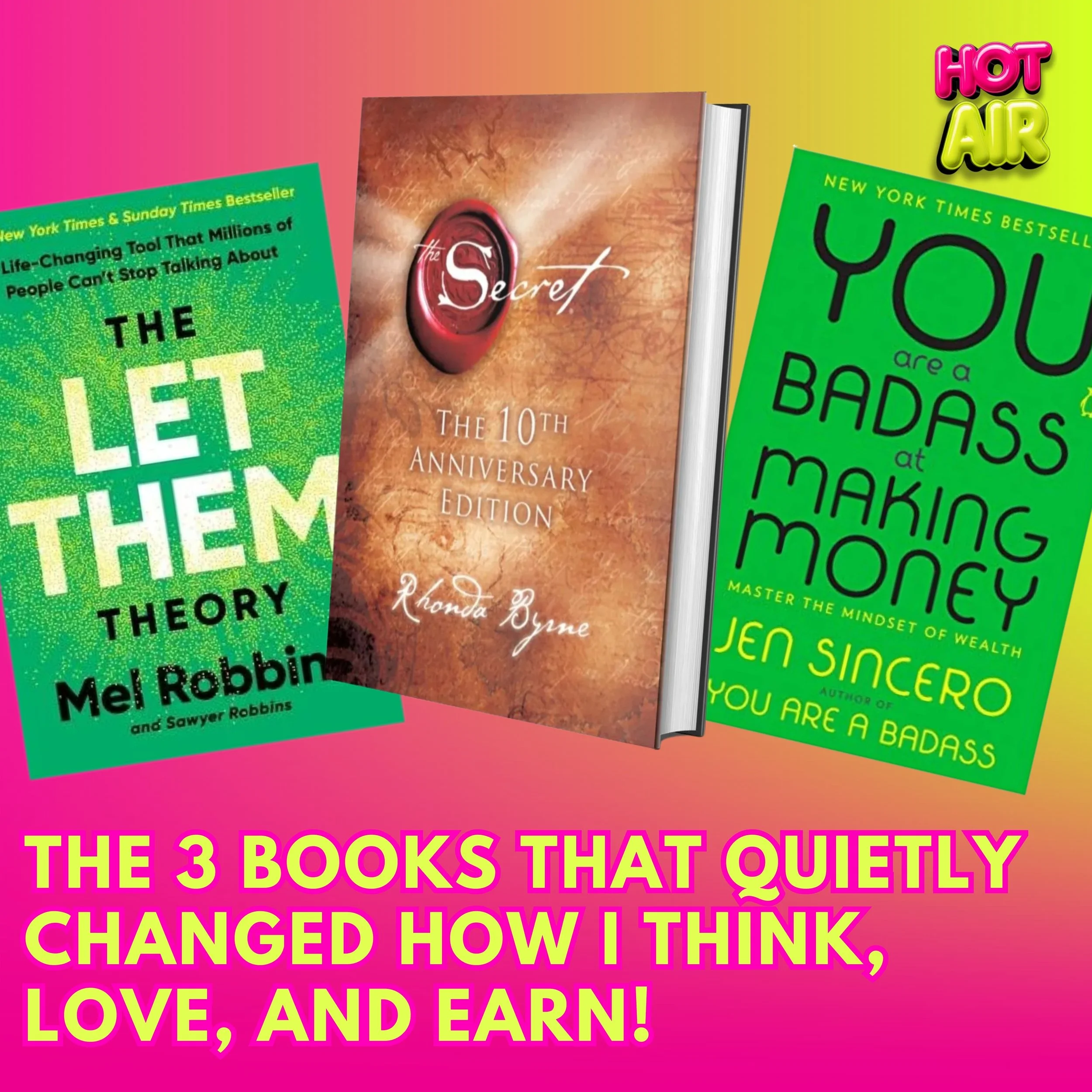
What happens when you stop managing other people, stop rehearsing failure, and stop playing small with your own potential? In this episode of Hot Air, I break down three books that genuinely shifted how I move through the world this past year: The Let Them Theory, The Secret, and You’re a Badass at Making Money.
There’s a certain kind of exhaustion that doesn’t come from doing too much—it comes from thinking too much. From over-analyzing people, rehearsing disappointment, and quietly negotiating with yourself about what you’re allowed to want. Over the last year, three books helped me untangle that mental noise in ways I didn’t expect: The Let Them Theory, The Secret, and You’re a Badass at Making Money. On the surface, these books seem unrelated. One is about boundaries, one about mindset, and one about money. In practice, they form a surprisingly cohesive framework for living with more ease, clarity, and self-trust.
The Let Them Theory is deceptively simple. When people behave in ways you don’t like, don’t understand, or can’t control—let them. This idea works not because it’s passive, but because it’s clarifying. Psychologically, it shifts your locus of control back to yourself. Instead of expending emotional energy trying to decode or manage other people’s behavior, you observe it and decide how you want to respond. This reduces anxiety, regulates the nervous system, and reinforces boundaries without confrontation. Letting people be who they are doesn’t mean tolerating mistreatment—it means no longer arguing with reality.
What makes this approach powerful is how it shows up in everyday situations. Dating becomes less exhausting when you stop filling in gaps for inconsistency. Work feels lighter when you stop tying your worth to other people’s reactions. Relationships clarify themselves when you stop over-functioning. The Let Them mindset isn’t about disengagement; it’s about discernment.
Where The Let Them Theory helps you release control externally, The Secret turns your attention inward. Often misunderstood as purely mystical, the real power of The Secret lies in its focus on attention and expectation. What you consistently think about, anticipate, and emotionally rehearse shapes how you show up. This is supported by cognitive psychology: the brain seeks evidence to support dominant beliefs. Visualization and expectation-setting don’t replace action—they shape it.
When you expect things to fail, you behave defensively. When you expect things to work out, you behave more confidently, persist longer, and notice opportunities you might otherwise dismiss. Gratitude, another key theme in The Secret, functions as a mental reorientation tool. It broadens perception, reduces anxiety, and interrupts scarcity thinking. Rather than denying hardship, it contextualizes it.
The real shift comes when you stop rehearsing disappointment as a form of protection. Hope can feel more vulnerable than pessimism, but it’s also more generative. By consciously visualizing success—not perfectly, but consistently—you train your nervous system to tolerate possibility.
You’re a Badass at Making Money brings these mindset shifts into tangible reality. Money is rarely just about income; it’s about identity, worth, and inherited beliefs. Many people carry subconscious narratives about money being scarce, stressful, or morally complicated. These beliefs quietly influence earning potential, pricing, and decision-making. The book challenges readers to examine their self-concept and recognize that financial growth often requires internal permission before external change.
From a psychological standpoint, this aligns with identity-based behavior. People act in accordance with who they believe they are. When someone sees themselves as capable and deserving, their choices reflect that belief. When they see themselves as undeserving or unstable, they unconsciously reinforce those outcomes. Changing your relationship with money isn’t about ignoring fear—it’s about refusing to let fear dictate your decisions.
Together, these three books create a balanced framework. Let people be who they are. Choose expectations that support growth. Build a relationship with money rooted in self-worth rather than shame. None of these ideas promise perfection or bypass difficulty. What they offer is clarity—and clarity creates momentum.
Personal growth doesn’t come from gripping tighter. It comes from releasing what was never yours to manage, believing in outcomes you haven’t seen yet, and allowing yourself to want more without apology. These books didn’t change my life by giving me answers. They changed it by helping me ask better questions—and by reminding me that ease, abundance, and alignment are not accidents. They’re choices, practiced daily.