
Ep.125 / Oscar Wilde’s Ghost: The Seance
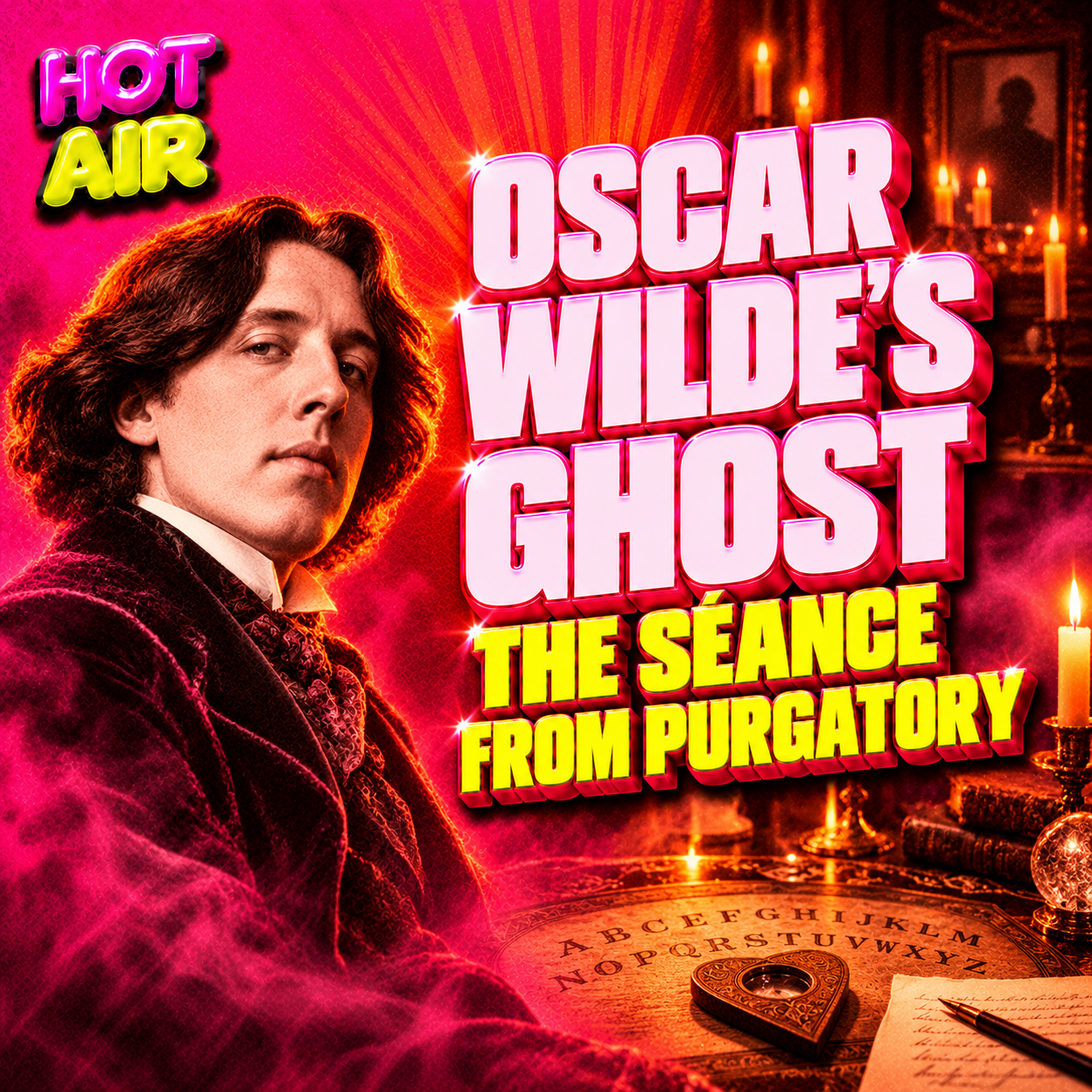
A pencil writes an unexpected name. A visitor describes eternal twilight. A researcher becomes the target of the ghost’s jokes. And a later message claims something much stranger than moving furniture: seeing through the eyes of strangers.
Did Oscar Wilde’s Ghost Speak from Purgatory? Inside the Strange Séances of 1923
Oscar Wilde died in Paris in 1900. Twenty-three years later, his name appeared during an automatic-writing session that was supposed to concern somebody else entirely. The visitor who followed was unhappy, opinionated, protective of his mother, and apparently unwilling to tolerate bad writing. If you have ever wondered what a séance with a difficult literary celebrity might involve, this story delivers. In this spooky-season episode of HOT AIR, Joshua Robert follows medium Hester Travers Smith’s account of Oscar Wilde’s ghost, from the first unexpected message to a claim that makes ordinary sightseeing feel considerably less private. Apparently, death had not ended the conversation.
Who was Oscar Wilde before the ghost story?
Before anybody claimed to contact his spirit, Wilde had already become famous for commanding attention. Born in Dublin in 1854, he grew up with a surgeon father and a writer mother, Jane, who published as Speranza. He later became celebrated for The Picture of Dorian Gray and plays including The Importance of Being Earnest. Beauty, language, and conversation mattered to him. So did being heard. That personality makes the later messages more interesting than an anonymous voice claiming to be cold. The sitters believed they were meeting a particular person, with family memories, literary opinions, and plenty of reasons to dislike being interrupted.
Wilde married Constance Lloyd, had two sons, and lived on Tite Street in Chelsea. His life changed brutally in 1895, when he was convicted under laws punishing sexual acts between men and sentenced to two years of hard labor. After prison, he left Britain. He died at forty-six. This history gives the haunting its emotional weight. The man remembered for wit had experienced public humiliation, separation, and loss. When the later messages describe isolation and longing for beauty, those complaints connect to someone whose life had already been painfully narrowed. The jokes matter, but there is a person underneath them.
The message that changed direction
Our paranormal story begins on June 8, 1923. Travers Smith was working with a man identified in her account as Mr. V. He held a pencil while she rested her fingers against his hand. Earlier attempts had produced little, followed by a message apparently from a deceased friend. This sitting seemed to resume that contact, mentioning the friend’s daughter, Lily. Then the writing changed direction. The transcript begins, “Lily, my little Lily,” before the interruption, “No, the lily was mine.” Asked who was speaking, the new communicator named Oscar Wilde. Nobody had sat down expecting that particular guest to arrive.
That is the moment that makes this an irresistible ghost story. A private connection becomes something unexpected, and the people involved have to respond before they understand what is happening. There is no need to imagine flying furniture or add a convenient thunderstorm. The unease is already sitting on the page. Someone has apparently interrupted another message and introduced himself. I would need everyone to remain very still while we worked out who had joined us. Travers Smith instead continued asking questions, which is useful, because our visitor had more to say than his name. Most of it was not cheerful.
What did Oscar Wilde’s ghost say about the afterlife?
One line in the recorded message reads, “In eternal twilight I move.” The visitor describes remembering the beauty of the world while being unable to experience it as before. Think of someone who loved color, flowers, rooms, and the pleasure of looking, now claiming to exist without that access. This is the purgatory of the story: awareness without the comforts he remembers. It is sad before it is frightening. Then the question becomes more unsettling. If someone remained conscious after death and could not reach what they loved, how determined might they become to find a way back toward it?
Travers Smith wanted identifying information. The visitor struggled with questions about Dublin addresses, then supplied Tite Street, Wilde’s London home. She said she did not know that address, and Mr. V said it was unfamiliar to him. The writing also supplied his brother’s name, Willie, and his mother’s pen name, Speranza. These exchanges do not give the episode a tidy stopping point. They give the sitters reasons to keep talking. A name becomes family details, moods, and reactions. The repeated plea, “Pity Oscar Wilde,” makes the visitor sound less like a cheerful reunion and more like someone seeking relief from an unpleasant existence.
A séance with editorial complaints
The voice did not stay mournful. When the writing produced an image he disliked, the supposed Wilde criticized the wording. Even a message from beyond apparently needed revisions. That detail gives the story its particular flavor. The visitor seems to care how he sounds, even while depending on a living person’s hand. Then Travers Smith makes an unflattering remark about his mother’s poetry, and he objects. Hester, perhaps leave that for another evening. The exchange is funny because it feels social and awkward. She is trying to identify a ghost; the ghost is trying to establish some standards for the conversation.
After the initial writing, Travers Smith invited him back through her Ouija setup: letters beneath glass, a covered table, and a heart-shaped wooden pointer. Her regular spirit intermediary, Johannes, was reportedly reluctant to admit him. Someone apparently anticipated a demanding guest. The board conversations allowed questions and answers to unfold more directly. A fuller record dated June 17 describes a visitor who preferred discussing his current condition to supplying convenient facts. He spoke about boredom, exposed thoughts, and work that recalled prison labor. So far, the afterlife offered poor visibility, limited privacy, and chores. You can understand why a conversation with the living held some appeal.
The ghost who questioned the researcher
On June 18, the company included Ernest Dingwall of the Society for Psychical Research. A researcher attending the session might reasonably expect to examine the visitor’s identity. The visitor had another plan. The message opened, “Being dead is the most boring experience in life.” It then turned toward the doubter, asking, “Mr. Dingwall, is he romance or reality?” Imagine arriving to investigate a ghost and finding yourself nominated for investigation. It is an excellent reversal, and an irritating one if you wanted straightforward cooperation. The episode lets that humor breathe without losing the stranger idea beneath it: perhaps the living were the fleeting visitors.
Borrowing the eyes of strangers
The creepiest turn arrives in a July 2 script. The visitor returns to his longing to see and describes looking through living people’s eyes. He mentions landscapes, tea fields in Ceylon, and a view of Paris from a boat on the Seine. In that last scene, a little girl clings to her mother, crying without understanding why. This is where the haunting moves beyond the invited séance. The people whose sight he claims to borrow are not necessarily seeking contact. Someone might simply be enjoying a view, unaware that another presence is experiencing it too. Suddenly, a quiet window feels different.
The sadness and the intrusion exist together. The visitor wants beauty, but the method he describes makes other people part of his search without asking them. Oscar, boundaries still apply. The later conversations continue the personality established at the beginning. By July 6, Travers Smith is asking about James Joyce’s Ulysses, and the reply delivers an unfriendly literary judgment. Yet the voice also seems pleased when she finds him amusing. He wants company and wants to make that company laugh. The account holds its interest through those changes: lonely, funny, demanding, and never quite willing to let the living control the exchange.
Why this Oscar Wilde haunting stays with you
Travers Smith collected the communications in a book, and Arthur Conan Doyle later wrote enthusiastically about them. Today, the attraction is more than a famous signature attached to a paranormal claim. The story develops a character through what he misses, whom he defends, and how he reacts to questions. It gives us something stranger than a ghost appearing silently in a hallway. This visitor wants to talk. Whether you believe Wilde reached the table or enjoy leaving that possibility open, the messages offer an unusually human haunting. Apparently, being dead had done nothing to improve his patience with dull conversation.
There is also a very good question to bring to your next spooky movie night: would you actually want the ghost you invited? Everyone imagines a reassuring message, a familiar voice, or a quick answer about the great beyond. Hester’s visitor offered complaints and unsolicited opinions instead. That unpredictability is the fun. You open the conversation hoping for a revelation and discover that death might not have made anybody easier to host. Consider yourself warned.
Listen to the Oscar Wilde ghost episode on HOT AIR
This episode follows one story from the beginning, with séance excerpts, spooky atmosphere, and room to laugh at a visitor who seems determined to have the final word. We meet Wilde before his name appears on the page, follow the messages, and end with the uncomfortable possibility of a presence sharing someone else’s view. Listen to Did Oscar Wilde’s Ghost Speak from Purgatory? wherever you get your podcasts, or watch HOT AIR on YouTube. Follow @_hotairpod on Instagram and TikTok, and visit hotairwithjoshuarobert.com for merch, listener stories, and topic suggestions. What would you ask Oscar if the pointer spelled his name?
Sources and editorial notes — outside blog word count:
Primary account: Hester Travers Smith, Psychic Messages from Oscar Wilde / Oscar Wilde from Purgatory (1923/1924): https://www.scribd.com/doc/21167024/222071-Oscar-Wilde-From-Pergatory-1924-by-Hester-Travers-Smith
Conan Doyle’s later discussion, The Edge of the Unknown: https://gutenberg.net.au/ebooks05/0500151h.html
The séance messages are presented as the claimed communicator’s words in Travers Smith’s account, not authenticated statements by Wilde. The blog’s humor and reactions are editorial commentary. The final episode script determines scope and tone. Blog word count excludes headings and source notes.