
Ep.105 / Why Do We Still Need Pride? Understanding the History, Purpose, and Importance of Pride Month
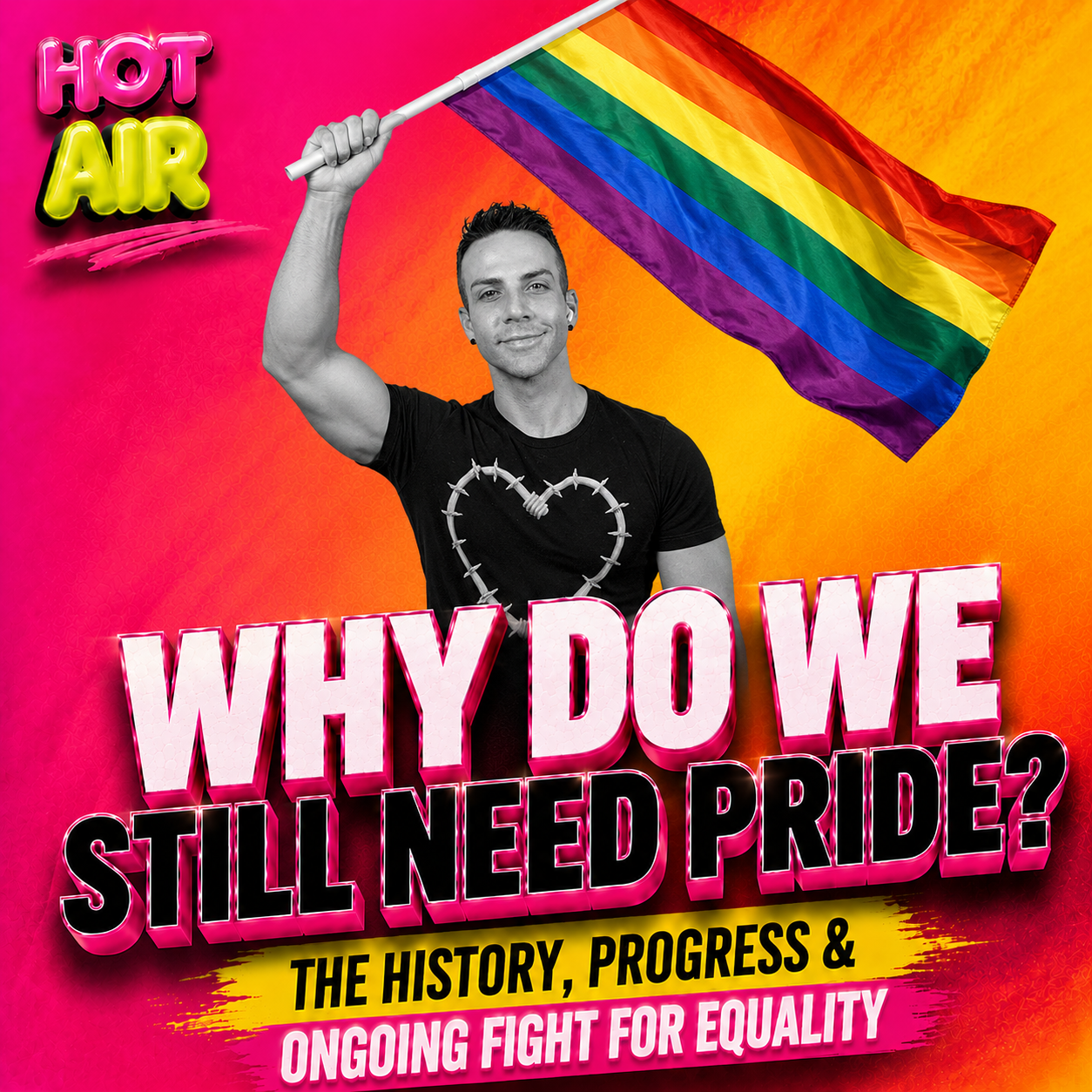
Why do we still need Pride?
It's a question that comes up every June. Let’s explores the history of Pride, the origins of the LGBTQ rights movement, and why equality and acceptance are not always the same thing.
Why Do We Still Need Pride? Understanding the History, Purpose, and Importance of Pride Month
Every June, the same question seems to find its way into conversations, social media comment sections, family gatherings, and political debates: Why do we still need Pride?
For some people, it's a genuine question. For others, it's asked rhetorically, often accompanied by statements like "Haven't LGBTQ people already achieved equality?" or "Why isn't there a straight Pride?" Regardless of the motivation, the question presents an opportunity for an important conversation about history, equality, acceptance, and human rights.
The reality is that Pride Month exists for reasons that extend far beyond rainbow flags, parades, and celebrations. To understand why Pride remains relevant in 2026, we need to understand where it came from, what it represents, and why millions of people around the world continue to find meaning in it.
Pride Began as a Protest, Not a Party
One of the biggest misconceptions about Pride is that it began as a celebration. In reality, Pride emerged from a fight for basic human dignity and equal treatment.
For decades, LGBTQ individuals faced widespread discrimination. People lost jobs, housing, relationships, and opportunities simply because of their sexual orientation or gender identity. Being openly gay could result in social rejection, legal consequences, and public humiliation.
Many LGBTQ people were forced to live secret lives, hiding fundamental parts of themselves from family, friends, employers, and society. Safe spaces were limited, and even those spaces often faced harassment and scrutiny.
Pride was born from a desire to challenge those conditions and demand visibility, equality, and recognition. Its origins are rooted in activism and advocacy rather than celebration alone.
The celebrations that exist today are possible because previous generations fought for rights that many people now take for granted.
Progress Does Not Mean the Work Is Finished
One reason people question the need for Pride is because significant progress has been made.
Marriage equality exists in many countries. LGBTQ representation in media has increased dramatically. Public attitudes have shifted in positive ways. Many workplaces have implemented policies protecting LGBTQ employees.
These achievements deserve recognition.
However, progress and completion are not the same thing.
A society can make meaningful progress while still facing significant challenges. Legal rights and social acceptance often develop at different speeds. While laws can change relatively quickly, cultural attitudes can take much longer to evolve.
Many LGBTQ individuals still experience discrimination, family rejection, bullying, harassment, and unequal treatment. Young people continue to struggle with acceptance in schools and communities. Adults still face difficult decisions about when and where it is safe to be fully open about their identities.
Pride serves as a reminder that progress should be celebrated while remaining aware of the work that remains.
Equality and Acceptance Are Different
One of the most important distinctions in conversations about Pride is the difference between equality and acceptance.
Equality generally refers to rights, protections, and legal recognition. Acceptance is something broader. It reflects how people are treated in their daily lives.
An individual may have legal rights while still facing judgment, exclusion, or rejection from family members, coworkers, religious communities, or social groups.
For many LGBTQ people, there remains a gap between legal equality and lived experience.
Questions such as:
"Will my family accept me?"
"Is it safe to come out?"
"Will this affect my career?"
"Can I be open about my relationship?"
continue to influence daily decisions.
Pride helps create visibility and support for individuals navigating those challenges.
LGBTQ Rights Around the World
Another reason Pride remains important is that LGBTQ equality is not universal.
While some countries have made significant advances in LGBTQ rights, others continue to criminalize same-sex relationships. In some parts of the world, LGBTQ individuals face imprisonment, violence, persecution, and severe legal consequences simply because of who they are.
Millions of people still live in environments where openly expressing their identity carries substantial personal risk.
Even within countries that have made legal progress, acceptance can vary dramatically depending on region, culture, religion, and local politics.
Looking beyond our own communities reminds us that the fight for equality remains a global issue.
Why Visibility Still Matters
Visibility is often one of the most misunderstood aspects of Pride.
Critics sometimes argue that sexual orientation should remain private. However, visibility has played a critical role in advancing understanding and acceptance.
For young LGBTQ individuals, seeing people who share their experiences can be life-changing. Representation provides reassurance that they are not alone and that a fulfilling future is possible.
Visibility also helps challenge stereotypes, reduce stigma, and foster empathy. When people encounter LGBTQ individuals as neighbors, coworkers, friends, family members, and public figures, misconceptions often begin to disappear.
Pride helps create opportunities for that visibility.
What Pride Means Today
Today, Pride means different things to different people.
For some, it is a celebration of identity. For others, it is an opportunity to remember history. For many, it is a chance to build community, support LGBTQ organizations, and advocate for equality.
At its core, Pride represents a simple but powerful belief: every person deserves dignity, respect, safety, and the freedom to live authentically.
Pride is not about elevating one group above another. It is about affirming that LGBTQ individuals deserve the same opportunities, protections, and freedoms as everyone else.
Why Pride Still Matters
The question isn't really whether Pride still matters.
The better question is whether visibility, acceptance, equality, community, and human dignity still matter.
As long as LGBTQ people face discrimination, rejection, unequal treatment, or barriers to living openly, Pride will continue to serve an important purpose.
Pride honors history. It celebrates progress. It builds community. It encourages visibility. It creates conversations. And it reminds us that equality is not something that can be taken for granted.
The goal of Pride has never been special treatment. The goal has always been equal treatment.
Until every person can live openly, safely, and authentically without fear of discrimination or exclusion, Pride will continue to matter—not just for LGBTQ people, but for anyone who believes that dignity and equality belong to everyone.